Mug Insights & Rituals

Why Size Matters When Choosing a Mug

From intense espresso shots to generous morning pour-overs, mug capacity directly influences heat retention, aroma concentration, and drinking comfort.

David Wilson 0 Comments
Why Size Matters When Choosing a Mug

The Direct Link Between Mug Volume and Beverage Flavor

Selecting a mug is rarely just an aesthetic choice; capacity profoundly influences the physical behavior of your brew. When hot coffee or freshly steeped tea enters a vessel with excessive volume, the expansive surface area causes rapid thermal dissipation. The liquid cools down long before you reach the bottom half, often shifting subtle floral or fruity notes into unwanted bitterness. Conversely, choosing a vessel matched precisely to your brew ratio preserves temperature stability and maintains the intended concentration from the first sip to the last.

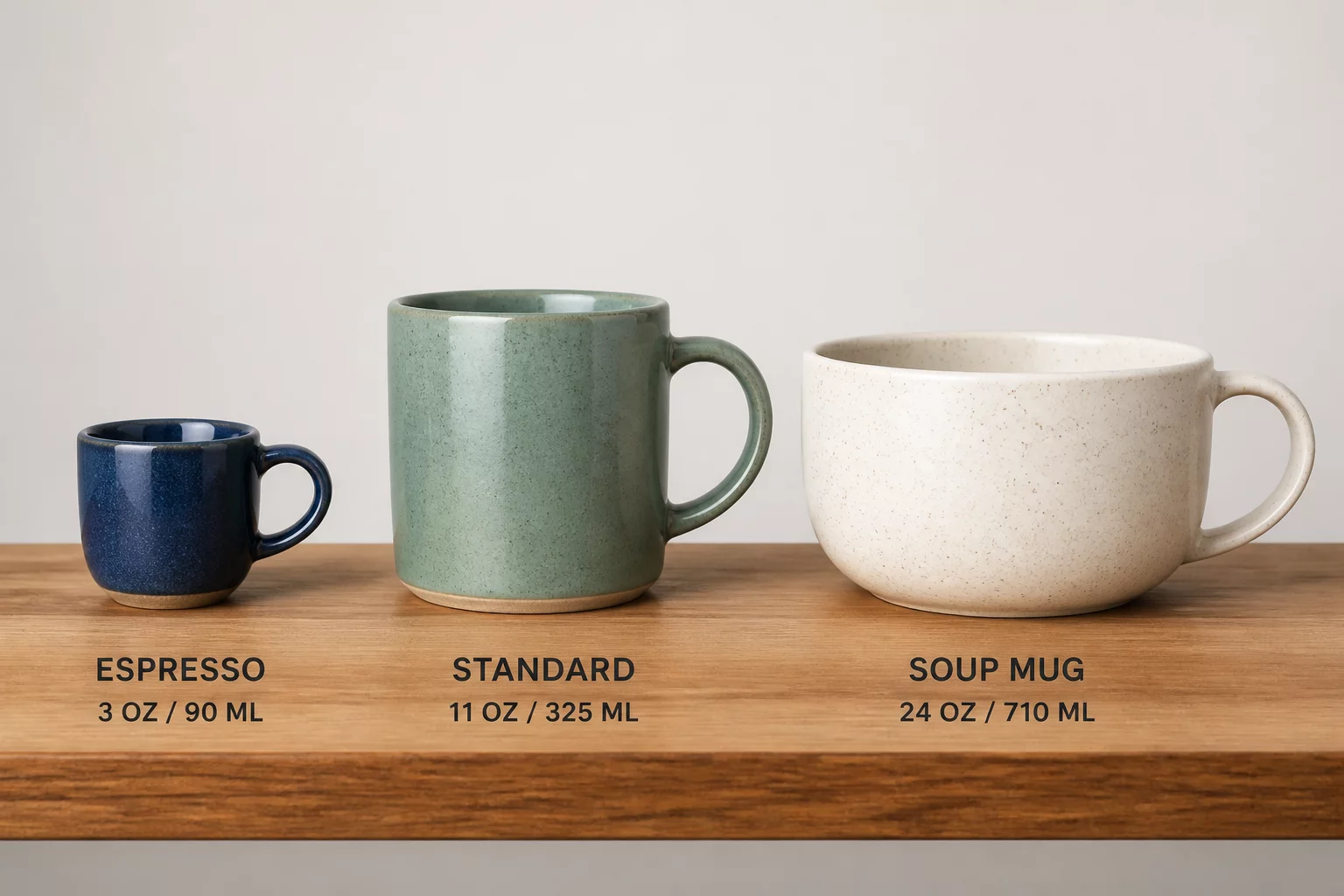
Beyond thermal mechanics, portion psychology plays a noticeable role in your daily routine. A standard 300ml cup naturally encourages steady, deliberate drinking, whereas an oversized 550ml vessel accommodates slow-sipping work sessions or rich, frothy drinks like lattes and hot cocoas. By considering how much liquid you genuinely enjoy before cooling occurs, you can pair specific roasts, infusions, and preparation methods with the right vessel dimensions.


Recommended Mug Capacities by Drink Type

Match your favorite beverage with the optimal volume range to balance thermal retention and aroma.

Parameter Specification & Recommendation
Espresso & Macchiato 60–150ml (Concentrates crema and delivers intense aromatic warmth quickly)
Filter & Drip Coffee 300–380ml (Maintains heat profile for 15–20 minutes without dilution)
Lattes, Mochas & Soups 450–600ml (Generous headspace for dense frothed milk and microfoam)
Herbal Infusions & Loose Teas 400–500ml (Allows dried botanicals and tea leaves space to expand)

Practical Guidelines for Selecting Your Daily Vessel

Consider these key factors before picking the volume for your next ceramic or stoneware piece:

  • Account for milk and foam addition: leave at least 50ml of spare headspace to prevent spills when stirring.
  • Factor in wall thickness: thicker ceramic retaining heat performs best when filled near capacity rather than half-empty.
  • Assess personal drinking pace: slow sippers benefit from compact 300ml cups or double-wall thermal insulation.
Explore Our Store

Looking for the Right Mug to Upgrade Your Morning?

Discover hand-finished stoneware, porcelain teacups, and insulated travel companions in our catalog.

Explore Mug Catalog

Related Articles & Stories

View All Posts

Discussion & Experiences (0)

No comments yet. Be the first to share your thoughts on mug sizing!